



An electric blanket is much more energy-efficient than an electric heater. According to Milieu Centraal, an electric blanket uses about 0.06 kWh per hour, while a heater can easily use 0.9 to 1.8 kWh per hour. In return, a blanket only warms you, whether you are in bed or on the couch. If you want to bring an entire room up to temperature, a blanket will fall short.
With the colder days ahead, many people are looking for a way to stay warm without turning up the central heating for the whole house. The electric heater and the electric blanket are the best-known options. They seem similar because they both run on electricity, but they do something completely different. In this article, we compare them.
Why does an electric heater use so much more than a blanket?
An electric heater warms the air in a room. That air must first reach the desired temperature, loses heat through windows, walls, and ventilation, and therefore must be continuously reheated. An electric blanket warms almost exclusively the thin layer around your body. Much less heat is lost, and therefore much less power is required.
Milieu Centraal is critical of electric heaters as a main heating source. According to the organization, you need about 9 kWh of electricity with an electric heater to replace the heat from one cubic meter of gas, and an electric blanket uses only about 0.06 kWh per hour, as stated in an article by Radar with an explanation from Milieu Centraal. An energy expert from Milieu Centraal even called the electric heater a real power guzzler on Vroege Vogels. You can read how the heater compares to central heating in our article on whether an electric heater is more energy-efficient than central heating.
Calculation example: electric heater or electric blanket
To make the difference concrete, we calculate with an assumed electricity price of €0.30 per kWh. Your rate may be higher or lower. The heater values are the consumption at continuous full power; with a thermostat that switches off in between, the actual consumption is lower.
| Appliance | Consumption per hour | Cost per hour | Cost at 3 hours per evening |
|---|---|---|---|
| Electric blanket | approx. 0.06 kWh | approx. €0.02 | approx. €0.05 |
| Electric heater at 900W | 0.9 kWh | €0.27 | €0.81 |
| Electric heater at 1800W | 1.8 kWh | €0.54 | €1.62 |
The difference is large: a heater on the low setting already uses about fifteen times as much per hour as an electric blanket. If you want to know how the power of a heater works out, also read our article on the difference between a 1500 and 2000 watt heater.
When do you choose an electric blanket?
An electric blanket is ideal if you want to be warm yourself in a fixed place. Think of a cold bed, where you preheat the electric blanket for a while before going to sleep, or an evening alone on the couch. You do not need to heat the entire room. Also in a bedroom that you deliberately keep cool, a blanket can be a lifesaver. How warm your bedroom should actually be, you can read in our article on the correct bedroom temperature in winter.
The limitation is clear: the room itself remains cold. If you get up, walk around, or if there are several people in the room, a blanket will be of little use. And a cold room also means cold walls and windows, where moisture condenses more quickly.
When is an electric heater the better choice?
An electric heater makes more sense if you want to bring a room up to temperature yourself, for example a study without a radiator, a bathroom for showering, or a room where several people are sitting. Use it briefly and specifically. Choose a setting that suits the room, let the thermostat do the work so that it does not run at full power unnecessarily, and set a timer so that it does not keep burning if you forget it. Close the door of the room, so that the heat does not leak through the whole house.
Combine smartly and pay attention to safety
You do not have to choose. Many people warm a room briefly with the heater and then stay warm under a blanket, with the heater off or on a low thermostat setting. This way you combine comfort with lower consumption.
Do use both devices as intended. The Netherlands Fire Service points out in the Fire-Safe Living checklist that you must use an electric blanket according to the instructions for use, because short circuits and overheating can cause fires. Never leave a heater burning when you go away or go to sleep, and keep free space around the device.
Direct answer: An electric blanket is much more energy-efficient than an electric heater: approximately 0.06 kWh per hour compared to 0.9 to 1.8 kWh for a heater. A blanket only warms you; if you want a room warm, use a heater briefly and specifically with a thermostat and timer.
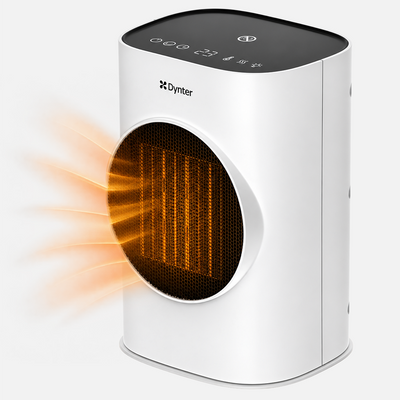
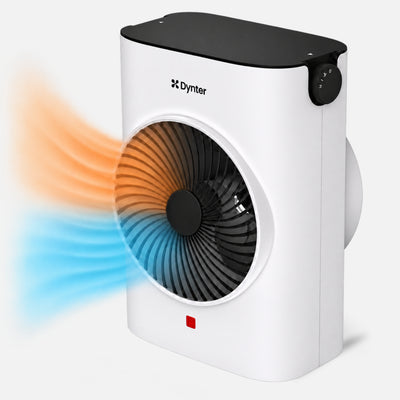
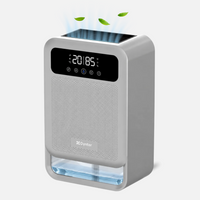
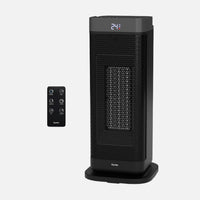
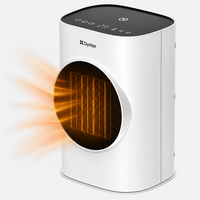
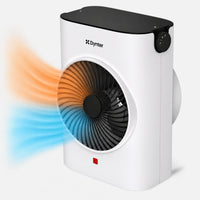
Product description: Dynter Aerva HT18C electric heater
If you still choose a heater, the Dynter Aerva HT18C helps to limit consumption with a low heat setting, a thermostat, and a timer.
Power: heat settings of 900W and 1800W, plus a ventilation setting without heating
Temperature: six settings from 10°C to 30°C
Timer: up to 9 hours, after which the heater switches off automatically
Heating: ceramic PTC heating with an oscillation function
Safety: overheating protection and tip-over protection
Display: dimmable in four settings, also completely off
Are you looking for targeted supplementary heating for short moments? Check out the Aerva HT18C electric heater or all heaters from Dynter.
Frequently asked questions
How much electricity does an electric blanket use per night?
At approximately 0.06 kWh per hour, that is less than 0.5 kWh for a few hours of use. Many people only preheat the bed, making the consumption even lower.
Is an electric blanket safe?
Yes, if you use it according to the instructions for use, check for damage, and do not use it when it is broken or very old. If in doubt, replace it.
Can an electric blanket replace a heater?
Only if you mainly want to be warm yourself in one place. A blanket does not heat the room, so for a warm room you need another heat source.
Which setting of an electric heater is the most energy-efficient?
The lowest heat setting in combination with a thermostat. This way the heater only provides heat when needed and does not run unnecessarily at full power.
Is an electric heater cheaper than central heating?
Usually not for an entire home. According to Milieu Centraal, heat from an electric heater is more expensive than heat from a gas central heating boiler. For short and specific supplementary heating of one room, a heater can be useful.