











A cold bridge is a place in your home where heat escapes more easily, for example because the insulation is interrupted or does not fit properly. On the inside, that section of wall, ceiling, or floor remains colder than the rest. Moist room air condenses on that cold spot, and where it is often wet, mould gets the chance to grow.
In autumn, cold bridges suddenly become visible. According to the KNMI forecast, the nights will become colder from the weekend, with a chance of light frost even early next week. The colder it is outside, the colder a poorly insulated spot inside becomes. That is exactly when the first black dots appear in that one corner of the bedroom.
What exactly is a cold bridge?
A well-insulated home has a kind of warm coat around it. A cold bridge is a gap or thin spot in that coat. Think of a concrete lintel above a window that runs from the inside to the outside, a balcony slab that protrudes from the floor without interruption, the junction between the floor and the facade, or the corner where two exterior walls meet. Cold bridges are also very common around window frames and along the ceiling at the exterior facade.
In those places, heat flows outside more quickly. The consequence is twofold: you lose energy, and the interior surface cools down to a temperature that is a few degrees lower than that of the wall next to it. Sometimes you can literally feel that difference when you place your hand against it.
Why does mould form at a cold bridge?
Air always contains water vapour. When that air cools against a cold surface, the relative humidity rises right next to that surface. If the temperature drops below the dew point, the moisture settles as condensation. You can read how exactly that works in our explanation about the dew point and condensation and about relative humidity.
At a cold bridge, this happens in the same place over and over again. The surface becomes damp again and again and dries poorly, especially if there is a wardrobe or sofa in front of it. Mould spores are present everywhere in the air and need exactly such a place to start growing. In its overview of moisture in the home, the Consumentenbond therefore lists mould in corners or around windows as a typical sign of poor ventilation or a cold bridge.
How do you recognise a cold bridge in the home?
Not every damp spot is a cold bridge. Look especially at the pattern: when and where does the problem occur?
| What you see | What it could mean |
|---|---|
| Black dots that keep reappearing in the same corner | Cold spot where moisture condenses, often a cold bridge |
| A section of wall that clearly feels colder than the rest | Interrupted or missing insulation |
| Moisture on the wall especially after cold nights | Surface drops below the dew point |
| Damp spot that gets larger after rain | Earlier penetrating moisture or a leak than a cold bridge |
| Moisture at the bottom of the wall, all year round | Possibly rising damp |
If you are unsure between condensation and other moisture, read our article about the difference between condensation and rising damp. With an infrared thermometer or a simple heat camera, you can also make cold spots visible. Preferably measure after a cold night, when the temperature difference is greatest.
What can you do yourself about a cold bridge?
The real solution is structural: insulate or interrupt the cold bridge. That is a job for a professional, or for your landlord if you rent. Until that is arranged, you can still do a lot to limit mould.
First of all, make sure there is less moisture in the air. The RIVM advises ventilating 24 hours a day. In its leaflet about mould and moisture, the RIVM calls humidity between 30 and 70 percent good, and points to signs such as condensation on windows, stuffy air, and mould spots. The lower the humidity, the colder a surface must be before condensation occurs.
Place furniture a few centimetres away from the exterior wall, so that air can flow along the cold spot. Heat the home as evenly as possible and do not let rooms with a cold bridge cool down completely. If mould still develops, clean it with an approved product and dry the spot thoroughly.
Does a dehumidifier help with a cold bridge?
A dehumidifier does not solve the cold bridge itself, but it can prevent so much condensation from forming. By lowering the humidity in the room, the dew point is lower and the cold spot stays dry more often. This is especially useful in a bedroom or room where you cannot easily ventilate extra. Keep in mind that according to the Consumentenbond, many dehumidifiers work best from around 15°C, so do not let the room get too cold.
Direct answer: A cold bridge is a poorly insulated, cold spot in the home. Moist air condenses there, which can cause mould. Have the cold bridge solved structurally and keep the humidity low until then by continuously ventilating, heating evenly, and possibly using a dehumidifier.
Product overview: Dynter AirPure DH251 dehumidifier
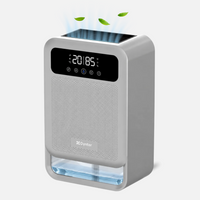
The Dynter AirPure DH251 is a compact dehumidifier that you place in the room where the cold corner is. This way you lower the humidity exactly where it is needed.
Dehumidification capacity: up to 900 ml per day
Water tank: 3800 ml, with automatic shut-off when the tank is full
Suitable for: rooms up to 55 m²
Consumption: 80W
Timer and night mode: timer from 1 to 24 hours and display off for use at night
Suffering from a cold, damp corner? Check out the DH251 dehumidifier or all dehumidifiers from Dynter.
Frequently asked questions
Is a cold bridge dangerous?
A cold bridge itself is not dangerous, but the mould that can be caused by it is not healthy to live in for a long time. If you have respiratory complaints or are unsure, consult your GP.
Can I insulate a cold bridge myself?
Small spots on the inside can sometimes be tackled yourself, but incorrectly applied insulation can move the problem. Have a professional first determine exactly where the cold bridge is and which solution fits.
Who should solve a cold bridge in a rental home?
A cold bridge is a structural problem and is the responsibility of the landlord. Report it in writing, take photos, and note when the mould returns.
Does mould-resistant paint help against a cold bridge?
Mould-resistant paint can slow down growth on the surface, but the moisture continues to condense. Without less moisture in the air or better insulation, the problem often returns.
Why do I see mould behind my wardrobe?
Behind a wardrobe against an exterior wall, air hardly circulates and the wall remains extra cold. Place the wardrobe a few centimetres away from the wall, so that the spot can dry out.