



A slight plastic or fabric smell from a new fan usually disappears after the first few hours of use. If a fan you have owned for some time suddenly smells of burning or burnt plastic, turn it off immediately and unplug it. The cause is often accumulated dust, a motor that is struggling, or a problem with the plug or power cord.
Many people only notice it when they take the fan out of storage after several months, or if it stays in the house and is run occasionally in winter to circulate the air. A strange smell is always a signal to stop and think. This article explains how to assess what is wrong and what to do.
Fan smells of burning: new or already in use for some time?
The situation in which you smell the odour says a lot about the cause. This overview helps you make an initial assessment.
| Situation | Probable cause | What to do |
|---|---|---|
| New fan, slight smell during the first few hours | Residual production or packaging materials heating up | Ventilate the room and keep an eye on it; if the smell does not quickly disappear, stop using it |
| First time turned on after storage | Dust on the motor and blades heating up | Turn it off, unplug it and clean it thoroughly |
| Strong smell of burning plastic, warm motor, running slowly | Motor is struggling or seizing up | Unplug it and do not use it again until it has been checked |
| Smell near the plug or power cord | Poor contact or a damaged power cord | Unplug it and check the power cord and socket |
| Smoke, sparks or crackling sound | Electrical fault | Turn off the power if it is safe to do so; call 112 immediately in case of fire |
Dust is the most common cause
A fan continuously draws in air, and with it dust, hair and lint. This accumulates around the motor, on the blades and in the grilles. If the motor gets warm, this dust can scorch. You will smell this as a dry burning odour. The Fire Service of the Netherlands points out in its brochure on fire safety at home that almost all electrical appliances get warm during use and that a fire hazard arises if this heat cannot escape due to accumulated dust. The advice is therefore: always keep electrical appliances free from dust.
You can read how to clean a fan safely and thoroughly in our step-by-step guide for cleaning a fan. Always do this with the plug out of the socket.
When is the problem with the motor?
If the burning smell occurs together with a fan that is slow to get going, hums or becomes noticeably warm, the motor is probably struggling. This can be caused by dirt around the shaft, dried-out bearings or a blade rubbing against something. The motor then has to work harder, gets warmer and may start to smell. You can read more about these signs in our article about a fan that does not start or runs slowly. Unusual noises are also an indication; you can read more about this in our article about a fan that makes noise.
What do you do immediately if your fan smells of burning?
Turn off the fan and unplug it. Let it cool down completely before touching it. Then carefully inspect the grilles, the blades and the back: do you see a lot of dust, discolouration, melted plastic or a damaged power cord? If there is discolouration, melted parts or a damaged power cord, do not use the fan again. Do not unscrew it yourself if it is still under warranty, but contact the seller.
If it is only dust and it no longer smells after thorough cleaning and a short test run under supervision, you can use it again. If the smell keeps coming back, stop using it permanently. According to the Fire Service of the Netherlands, electrical equipment is one of the most common causes of fire, as shown by tips published by the Consumers' Association. A questionable fan is not worth that risk.
How to prevent your fan from smelling of burning
Clean the fan regularly during the season and especially before storing it. Then store it dust-free, for example in the box or under a cover. Plug it directly into a wall socket and occasionally check the power cord for kinks and cracks. Do not place the fan behind curtains or against a wall, so that it can draw in air freely. And do not leave it running when you are not at home.
Direct answer: A new fan may smell slightly during the first few hours. If a fan you have owned for some time smells of burning or burnt plastic, turn it off, unplug it and let it cool down. Usually, it is accumulated dust; if the motor is warm and running slowly, discoloured or the power cord is damaged, do not use it again.
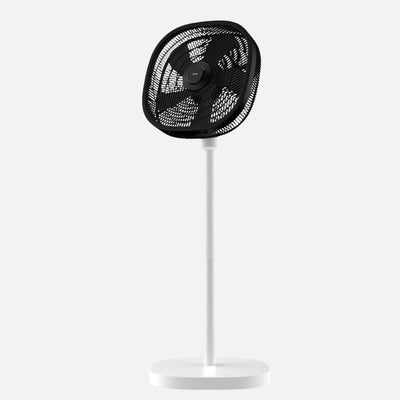
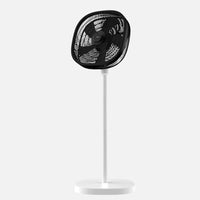
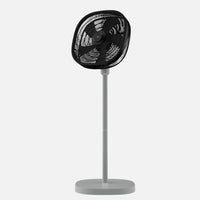
Product overview: Dynter AirFlow AV25G pedestal fan
The Dynter AirFlow AV25G is a foldable pedestal fan. Because you can fold it up compactly, you can easily store it dust-free outside the season.
Energy consumption: 55W (AC motor)
Speeds: three settings via a control knob
Oscillation: automatically distributes the air over a wide angle
Adjustable height: from 80 to 125 cm
Foldable: folds down to 42 × 42 × 20 cm
Looking for a new fan? Check out the AV25G fan or all fans and air coolers from Dynter. If your Dynter fan smells of burning, do not use it again and contact our customer service at support@dynter.eu.
Frequently asked questions
Is it normal for a new fan to smell?
A slight smell during the first few hours is common and usually disappears on its own. A strong burning smell, smoke or a smell that persists is not normal. Turn off the fan.
Can dust in a fan cause a fire?
Accumulated dust can get warm and scorch, and according to the fire service, dust in electrical appliances increases the fire hazard. Regular cleaning is therefore important.
Can I still use a fan if it has smelled of burning?
Only if the cause was clearly dust, it no longer smells after cleaning and there is no discolouration or damage visible. If in doubt, do not use it again.
Why does my fan motor get hot?
A motor gets warmer when it struggles, for example due to dirt around the shaft or a blade that is rubbing. If a motor gets so hot that it starts to smell, have it checked or replace it.
Can I also run a fan in winter?
Yes, for example to circulate the air. Do keep it dust-free and do not leave it running unattended, especially if it has been stationary for a long time.